
If you are trying to drop body fat, you have likely seen fitness influencers heavily promoting electrolyte powders. But do electrolytes actually help with weight loss, or are they just expensive flavored salt?
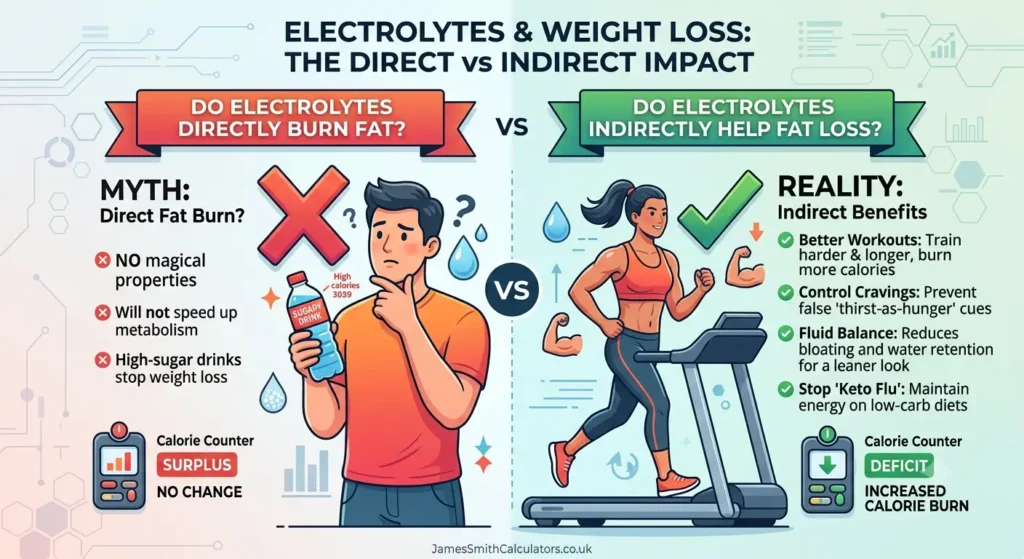
Here is the direct, science-backed answer: Electrolytes do not possess any magical fat-burning properties, and drinking them will not directly speed up your metabolism.
However, electrolytes play a massive, behind-the-scenes role in the process of losing weight. If your fluid balance is off, your workouts will suffer, your scale weight will fluctuate wildly, and your diet will feel twice as hard.
This guide breaks down exactly how electrolytes impact your body, why they cause sudden drops on the scale, and how to use them correctly to support your fat-loss goals.
What Are Electrolytes?
Electrolytes are essential minerals in your body that carry an electric charge. The most common ones are:
- Sodium
- Potassium
- Magnesium
- Calcium
Your body needs them to balance your fluid levels, move your muscles, and keep your nervous system working properly. You lose them naturally when you sweat or go to the bathroom.
The “Water Weight” Illusion (Why People Think Electrolytes Burn Fat)
To understand electrolytes, you first need to understand water weight—specifically how your body stores carbohydrates.
When you eat carbs, your body stores them in your liver and muscles as glycogen. Here is the catch: every 1 gram of glycogen holds onto roughly 3 grams of water.
If you start a diet—especially a low-carb or Ketogenic diet—your body quickly burns through its glycogen stores. As the glycogen leaves, the attached water is flushed out through your urine.
At the same time, eating fewer carbs lowers your insulin levels. When insulin drops, it signals your kidneys to stop holding onto sodium and start excreting it. Since sodium pulls water with it, you lose even more fluid.
- The Result: You might lose 3 to 5 pounds (1.5 to 2.5 kg) in your first week.
- The Reality: This is entirely water and excreted electrolytes (sodium), not body fat.
While electrolytes did not cause the fat loss, replacing the sodium, potassium, and magnesium you just flushed out is critical to prevent the headaches, fatigue, and muscle cramps often referred to as the “Keto flu”.
3 Ways Electrolytes Actually Support Fat Loss
While they do not burn fat directly, maintaining your electrolyte balance indirectly drives your weight loss in three major ways.
1. Maximizing Workout Performance
Fat loss requires a calorie deficit, and intense training helps create that deficit while maintaining muscle. When you sweat, you lose both water and sodium.
According to the American College of Sports Medicine (ACSM), losing just 1% to 2% of your body weight in sweat can significantly increase your heart rate, make the workout feel much harder, and limit your ability to train at a high intensity. If you are lifting weights or doing intense cardio, a lack of sodium and potassium will cause early fatigue and muscle cramping. By keeping your electrolytes topped up, you can train harder, lift heavier, and burn more calories.
2. Preventing “False Hunger”
The human body often confuses mild dehydration with hunger. When you are low on fluids and essential minerals, you might find yourself craving salty, high-calorie snacks (like crisps or chips) because your body is desperately searching for sodium. Staying properly hydrated with balanced electrolytes helps suppress these false hunger cues, making it much easier to stick to your calorie targets.
3. Regulating Digestion and Bloating
If you eat a diet high in processed foods, you are likely consuming too much sodium and not enough potassium. This imbalance forces your body to hold onto excess fluid, leaving you looking bloated and soft. Potassium and magnesium help flush out excess cellular water, improving your digestion and helping you look leaner, even if your body fat hasn’t changed.
Do You Need an Electrolyte Supplement?
Most people do not need to spend money on expensive electrolyte powders. If you are eating a balanced diet, you are likely getting enough naturally.
Where to get them from real food:
- Sodium: A pinch of sea salt on your meals.
- Potassium: Bananas, potatoes, spinach, and avocados.
- Magnesium: Dark leafy greens, pumpkin seeds, and almonds.
- Calcium: Greek yogurt, milk, or fortified plant milks.
When SHOULD You Supplement?
According to sports medicine guidelines, you only need to actively supplement with an electrolyte drink if you fall into one of these categories:
- You are doing high-intensity exercise for over 60 minutes. (The ACSM recommends 0.5 to 0.7 grams of sodium per liter of water for long workouts).
- You are following a strict low-carb or Keto diet. (Your kidneys excrete sodium at a much higher rate when insulin is low).
- You train in a very hot, humid climate and have a high sweat rate.
Note: If you do buy a supplement, check the label. Many popular sports drinks are packed with liquid sugar. Consuming hundreds of liquid calories will completely erase the calorie deficit you need for weight loss.
The Bottom Line
Electrolytes are a tool for performance and hydration, not a fat-loss supplement. They will keep your energy high, stop muscle cramps, and help your body manage fluid so you don’t feel bloated.
However, the only true driver of weight loss is a consistent calorie deficit. Before you worry about buying supplements, make sure your daily nutrition is dialed in. You can easily figure out your exact calorie and macro targets using the tools on our homepage at James Smith Calculators.
Nail your calories first, drink enough water, salt your food to taste, and let your body do the rest.