

There is no single perfect macro ratio for weight loss for women. A woman in her 20s, 40s or 60s does not automatically need one fixed ratio of protein, carbs and fat. Your best macro split depends on your height, weight, activity level, appetite, health, menopause stage, food preferences and calorie intake.
That said, many women use the following macro ranges as a practical starting point:
| Goal style | Protein | Carbohydrates | Fat |
|---|---|---|---|
| Balanced weight loss | 25–30% | 40–50% | 25–35% |
| Higher-protein weight loss | 30–35% | 30–40% | 25–35% |
| More active lifestyle | 25–30% | 45–55% | 20–30% |
| Lower-carb preference | 30–35% | 25–35% | 30–40% |
These are not NHS prescriptions. They are starting points. In the UK, official healthy eating advice is based more on overall food balance, fruit and vegetables, fibre-rich starchy foods, protein foods, unsaturated fats, and appropriate calories than on one exact macro ratio. The NHS Eatwell Guide says balance does not need to happen at every meal, but should be achieved across a day or week.
Macro ratio chart for weight loss by age
The table below gives example starting points, not strict rules.
| Age group | Example starting macro split | Why this may help | Main focus |
|---|---|---|---|
| 18–29 | 25% protein / 45% carbs / 30% fat | Often suits active lifestyles and gym routines | Build consistent habits |
| 30–39 | 30% protein / 40% carbs / 30% fat | May help with fullness during busy work/family years | Protein, meal planning, routine |
| 40–49 | 30% protein / 40% carbs / 30% fat | Useful during perimenopause years when appetite, sleep and body composition may shift | Strength training, sleep, protein |
| 50–64 | 30% protein / 35% carbs / 35% fat | May suit women who prefer slightly lower carbs while keeping fibre high | Protein, fibre, bone and muscle support |
| 65+ | Personalised | Health, appetite, medication and muscle maintenance matter more than a generic ratio | Avoid under-eating; seek tailored advice |
Macro Ratio Starting Points for Women by Age
Example macro starting points only — not medical advice.

Is there an official NHS macro ratio for female weight loss?
No. There is no official NHS table that says women must eat a specific macro ratio for weight loss at each age.
The NHS gives general calorie guidance for weight loss. It says the average person trying to lose weight should aim to reduce daily calorie intake by about 600 kcal, which means around 1,400 kcal per day for women and 1,900 kcal per day for men as average examples. It also states that individual dietary advice should come from a registered healthcare professional when someone has special dietary requirements, medical needs or an eating disorder.
That does not mean every woman should eat 1,400 calories. A taller, very active woman may need more. A shorter, less active woman may need less. A woman with a medical condition may need a completely different approach.
Best Macro Ratio for Women in Their 20s
For women aged 18–29, a good starting point may be:
This age group often includes students, shift workers, new professionals, gym-goers or women with irregular routines. The biggest challenge is often not age itself, but inconsistent meals, alcohol, takeaways, emotional eating, low-protein breakfasts or weekend overeating.
What to Focus On
Prioritise:
- Regular meals
- Enough protein at breakfast and lunch
- Fibre-rich carbs
- Not cutting calories too aggressively
- Learning basic portion sizes
Example UK Day
| Meal | Example |
|---|---|
| Breakfast | Porridge with semi-skimmed milk, berries and Greek yoghurt |
| Lunch | Chicken or tofu wrap with salad |
| Snack | Apple with cottage cheese or a protein yoghurt |
| Dinner | Salmon, potatoes and vegetables |
Common Mistake
Going too low in calories during the week, then overeating at the weekend.
Best Macro Ratio for Women in Their 30s
For women aged 30–39, a useful starting point may be:
Many women in their 30s are balancing work, family, commuting, stress, social life and less flexible time. A higher-protein approach may help with fullness and reduce random snacking.
What to Focus On
Prioritise:
- Protein at every meal
- Meal prep or easy repeat meals
- Fibre-rich lunches
- Steps and strength training
- Realistic calories, not crash dieting
Example UK Day
| Meal | Example |
|---|---|
| Breakfast | Eggs on wholemeal toast with tomatoes |
| Lunch | Tuna jacket potato with salad |
| Snack | Greek yoghurt with berries |
| Dinner | Turkey chilli or lentil chilli with rice |
Common Mistake
Skipping breakfast or lunch, then feeling starving in the evening.
Best Macro Ratio for Women in Their 40s
For women aged 40–49, a good starting point may be:
Some women in their 40s begin to notice changes in sleep, stress tolerance, recovery, hunger and body composition. This is also a decade where strength training becomes especially useful.
What to Focus On
Prioritise:
- Protein spread across the day
- Strength training 2–3 times weekly if able
- Enough fibre
- Lower alcohol intake if it affects sleep or appetite
- Sleep and stress management
Example UK Day
| Meal | Example |
|---|---|
| Breakfast | Greek yoghurt, oats, berries and chia seeds |
| Lunch | Lentil soup with wholemeal bread |
| Snack | Boiled eggs or edamame |
| Dinner | Chicken stir-fry with rice and vegetables |
Common Mistake
Blaming age alone while overlooking sleep, alcohol, stress, low steps or very low protein.
Best Macro Ratio for Women in Their 50s
For women aged 50–64, a useful starting point may be:
This slightly higher-fat, moderate-carb approach can work well for some women, especially if they prefer filling meals. However, carbs should not be removed completely. Wholegrain starchy foods, fruit, vegetables, beans and pulses can provide useful fibre.
The NHS recommends basing meals on higher-fibre starchy foods and eating at least 5 portions of fruit and vegetables daily.
What to Focus On
Prioritise:
- Protein with every meal
- Fibre from vegetables, fruit, oats, beans, lentils and wholegrains
- Strength training or resistance exercise
- Calcium-rich foods
- Unsaturated fats instead of lots of saturated fat
Example UK Day
| Meal | Example |
|---|---|
| Breakfast | Scrambled eggs on wholemeal toast |
| Lunch | Chicken salad with new potatoes and olive oil dressing |
| Snack | Plain yoghurt with fruit |
| Dinner | Baked cod, lentils or beans, vegetables and a small portion of rice |
Common Mistake
Going very low-carb and losing fibre, energy and meal enjoyment.
Best Macro Ratio for Women Over 65
For women over 65, a generic macro ratio is less useful.
A woman over 65 may need to consider appetite, dental health, digestion, medication, mobility, muscle loss, bone health, medical conditions and unintentional weight loss risk. This is why personal advice from a GP or registered dietitian can be more important than following a standard online macro calculator.
A possible starting point for some women may be:
But this should be personalised.
What to Focus On
Prioritise:
- Not under-eating
- Enough protein
- Strength and balance exercises if safe
- Fibre and fluids
- Regular meals
- Medical advice if weight loss is sudden or appetite is low
Common Mistake
Trying to follow a younger person’s aggressive fat-loss plan.
Macro ratio by lifestyle
Age is only one part of the picture. Lifestyle can matter more.
| Lifestyle | Suggested starting split | Best for |
|---|---|---|
| Desk-based, low activity | 30% protein / 35% carbs / 35% fat | Women who feel better with moderate carbs |
| Regular walker | 30% protein / 40% carbs / 30% fat | Balanced fat loss |
| Gym or strength training | 30% protein / 40–45% carbs / 25–30% fat | Muscle support and training energy |
| Runner/cyclist/high activity | 25% protein / 50% carbs / 25% fat | Higher energy output |
| Lower-carb preference | 35% protein / 30% carbs / 35% fat | Appetite control if fibre remains high |
Macro Split by Lifestyle
Choose your macro split by lifestyle, not just age.
Balanced
Active
Lower-carb
Sample 1-day meal plans
Balanced macro day
| Meal | Food idea |
|---|---|
| Breakfast | Porridge with semi-skimmed milk, berries and Greek yoghurt |
| Lunch | Tuna jacket potato with salad |
| Snack | Apple and cottage cheese |
| Dinner | Chicken, rice, vegetables and olive oil dressing |
Vegetarian macro day
| Meal | Food idea |
|---|---|
| Breakfast | Greek yoghurt or fortified soya yoghurt with oats and berries |
| Lunch | Lentil soup with wholemeal bread |
| Snack | Boiled eggs, edamame or hummus with carrot sticks |
| Dinner | Tofu stir-fry with noodles and vegetables |
Budget-friendly macro day
| Meal | Food idea |
|---|---|
| Breakfast | Eggs on wholemeal toast |
| Lunch | Beans on jacket potato with salad |
| Snack | Low-fat yoghurt and fruit |
| Dinner | Lentil chilli or turkey mince chilli with rice |
Common macro mistakes women make
1. Eating too little protein
Low-protein diets can make weight loss harder because meals may feel less filling. Try to include protein at each meal.
2. Cutting carbs too low
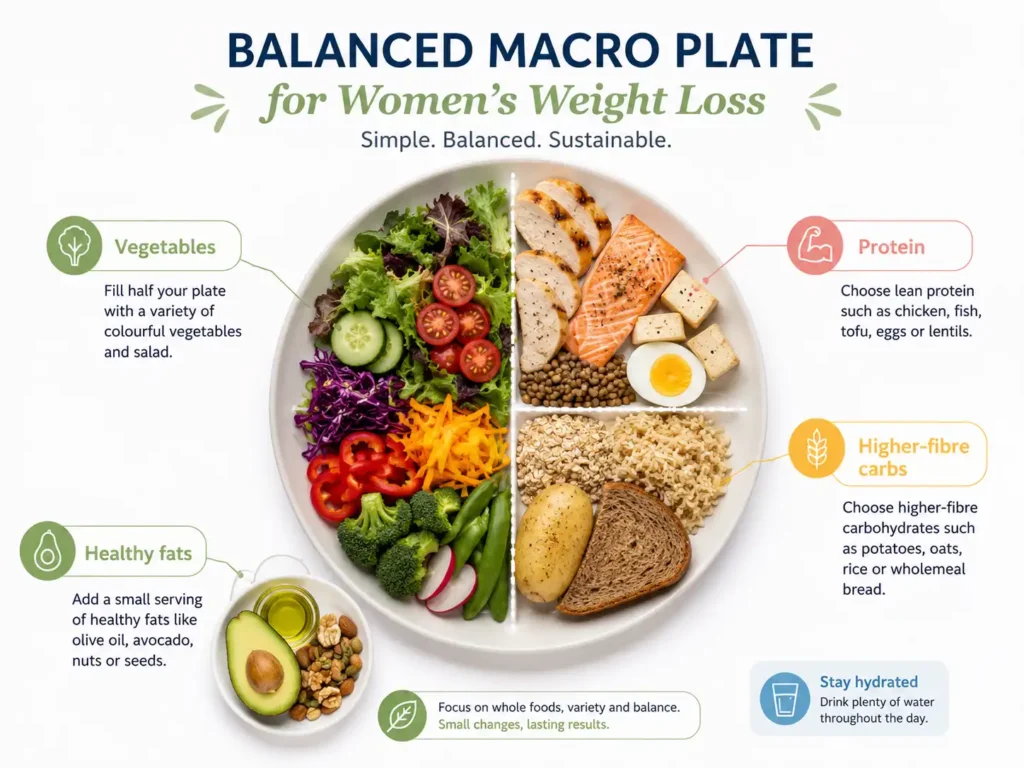
Carbs are not automatically fattening. Portion size, food quality and total calories matter. Higher-fibre carbs such as oats, potatoes with skin, brown rice, wholemeal bread, beans and lentils can fit well into a weight-loss plan.
3. Eating too little fat
Very low-fat diets can feel unsatisfying. Include small amounts of unsaturated fats such as olive oil, rapeseed oil, nuts, seeds and oily fish.
4. Ignoring calories
You can eat “healthy” foods and still consume more energy than your body uses. Nuts, oils, cheese, avocado and granola are nutritious but calorie-dense, so it can help to check your daily target with a James Smith Calorie Calculator before setting your macros.
5. Forgetting fibre
The UK government dietary recommendations include 30g fibre per day for adults.
6. Copying someone else’s macros
Your friend’s macros may not work for you. A 5ft 2 woman with a desk job and a 5ft 9 woman who strength trains four times per week may need very different targets.
7. Changing macros too often
Give a plan at least 2–4 weeks unless you feel unwell, overly hungry or advised otherwise by a healthcare professional.
Final takeaway
The best macro ratio for weight loss for women by age is not a magic number. For many womens, a sensible starting point is:
30% protein / 40% carbs / 30% fat
Women who are more active may prefer more carbs. Women who are less active or feel better on lower carbs may prefer slightly more fat. Women over 50 or 65 should be especially careful not to under-eat protein, fibre or total calories.